Compare: Proxmox and web hosting
Plesk alternative: Tenvara
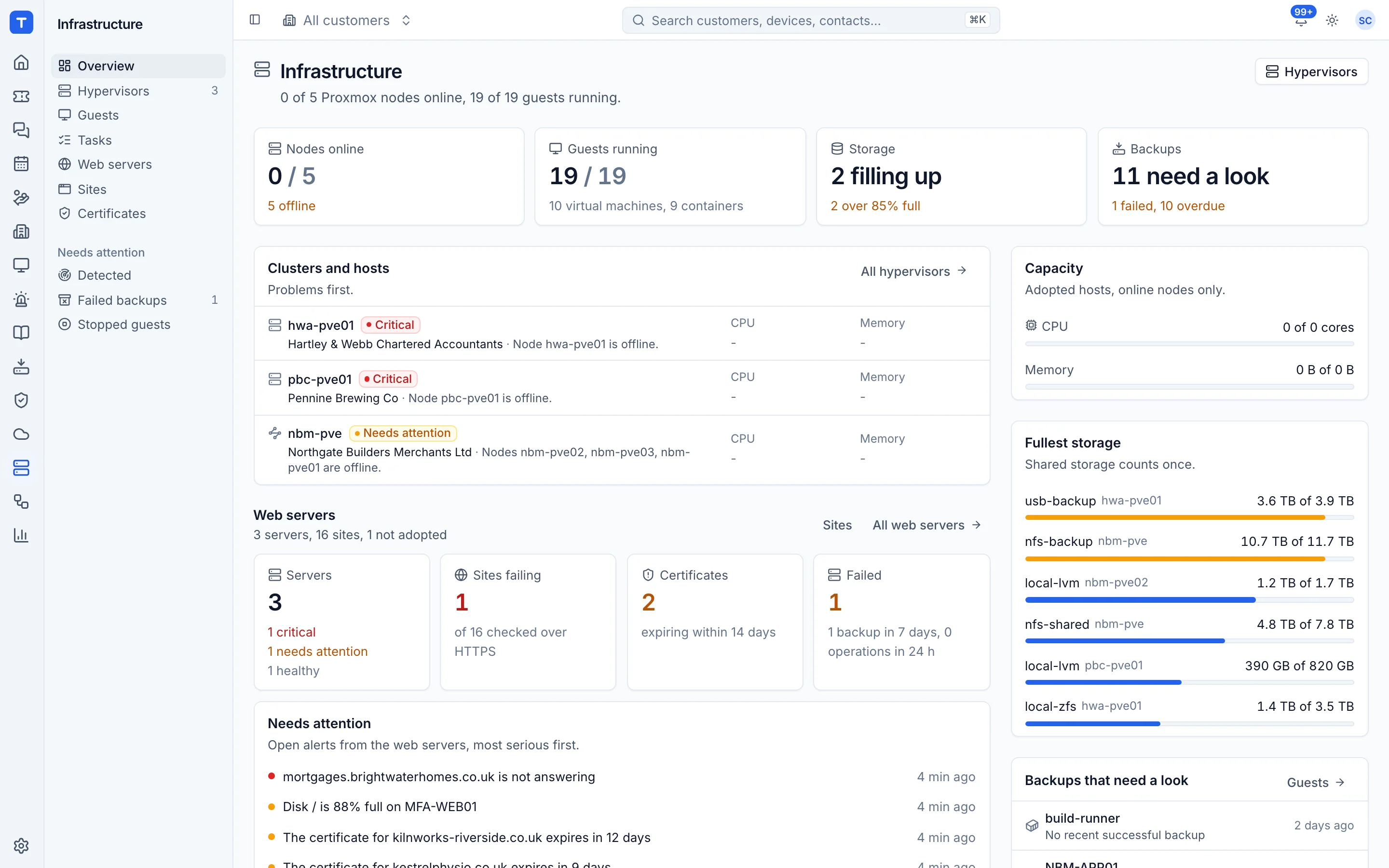
Plesk is a server control panel used by hosts, agencies and IT teams to run websites, mail, DNS and WordPress, with accounts for resellers and customers. MSPs who host a handful of customer sites often only need the website part. Tenvara runs that through the same agent you already use for monitoring and patching, with no panel to install on the server, and puts site alerts into your normal tickets. If you sell hosting packages with mail and a customer login, Plesk remains the better fit.
The tool today
What Plesk does
Web hosting control panel for websites, mail, DNS and WordPress on Linux and Windows servers. Made by Plesk. This is how the vendor describes it, in our words.
- Build and manage many websites from one dashboard, on Linux or Windows servers.
- WP Toolkit for WordPress: mass management, staging, cloning, updates and security.
- Mail server with Roundcube and Horde webmail, plus DKIM, SPF and DMARC.
- DNS zones with DNSSEC, databases, SSL certificates and Git deployment.
- Scheduled incremental backups, including to cloud storage.
- Reseller and customer subscription management, and more than 100 extensions.
Side by side
Tenvara vs Plesk
The Proxmox and web hosting jobs that matter most, and how each product handles them.
Create and manage websites
Many sites from one dashboard
SSL certificates
Let's Encrypt and SSL extensions
Databases
MariaDB, plus PostgreSQL and MSSQL modules
Git deploys
Git integration
WordPress management
WP Toolkit with staging and cloning
Site backups
Incremental, to S3, Google Drive, OneDrive, Dropbox
Add-on means the vendor sells it as a separate product or paid extra. Plesk details come from the vendor's own website, see sources.
The one-app pitch
What else you'd replace
Most MSPs running Plesk pay for several other tools beside it. Tenvara does these jobs too, on the same customer record, with one agent and one login.
See every comparisonSwitching
Moving from Plesk
A calm move, not a big bang. Run both side by side until your team is happy.
-
1
Build a server and install the agent
Site operations need Linux with nginx (Ubuntu 24.04 or Debian 12). Install the Tenvara agent the same way as on any server.
Installing the agent -
2
Adopt the server
An administrator adopts it, setting the backup folder and the contact email for certificates. Sites already on a server show as discovered and are never changed.
Web servers -
3
Create each site and move it across
Create the site with its runtime and domains, then bring the code in by a git deploy or an uploaded build, or over SFTP.
Creating and managing sites -
4
Point DNS and issue certificates
Once DNS points at the new server, issue a Let's Encrypt certificate from the site page. Renewals then run by themselves.
Creating and managing sites -
5
Move mail and DNS elsewhere first
Tenvara does not host mail or DNS, so move those to Microsoft 365 or your DNS provider before you retire the Plesk server.
Plesk pricing
Plesk publishes licence prices by edition on its pricing page: Web Admin (10 domains), Web Pro (30 domains) and Web Host (unlimited domains), for VPS and dedicated servers.
Vendor pricing pageTenvara pricing
One subscription, per technician or per endpoint, hosted or self-hosted, with every feature in every plan.
See pricingQuestions
Plesk vs Tenvara: FAQ
More Proxmox and web hosting comparisons
See Tenvara next to Plesk.
A 30 minute walkthrough of the real product. Bring your list of what you use today and we'll show you where each part lives in Tenvara, and where it doesn't.
Comparison based on publicly available information as of September 2026. Plesk is a trademark of its owner; Tenvara is not affiliated with it. Spotted something out of date? Tell us and we'll correct it.
Sources